Who is Adrian Fox?
Adrian is a retired teacher of 78 now living in France. He worked for 30 years as a secondary teacher of English in Wiltshire where he was also a district councillor for twelve years representing five small villages
Adrian was educated at Fitzmaurice Grammar School in Bradford on Avon and at Essex University where he was one of the first 120 students in 1964.
His first job was in publishing in central London but after more time in various other occupations he became a teacher in Bristol in 1973.
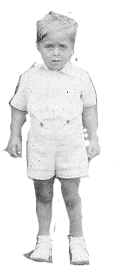
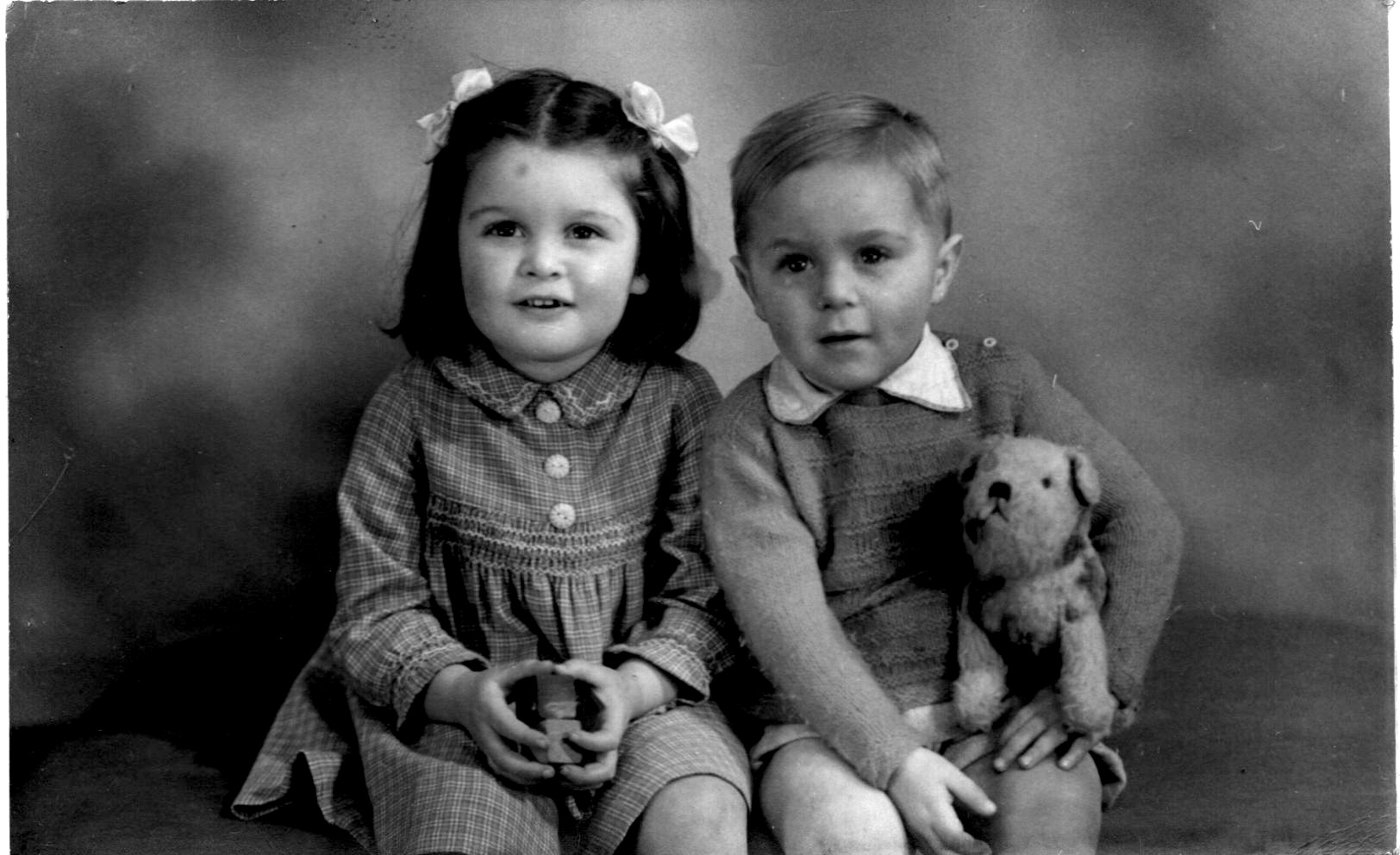
Adrian at Age 3 or 4
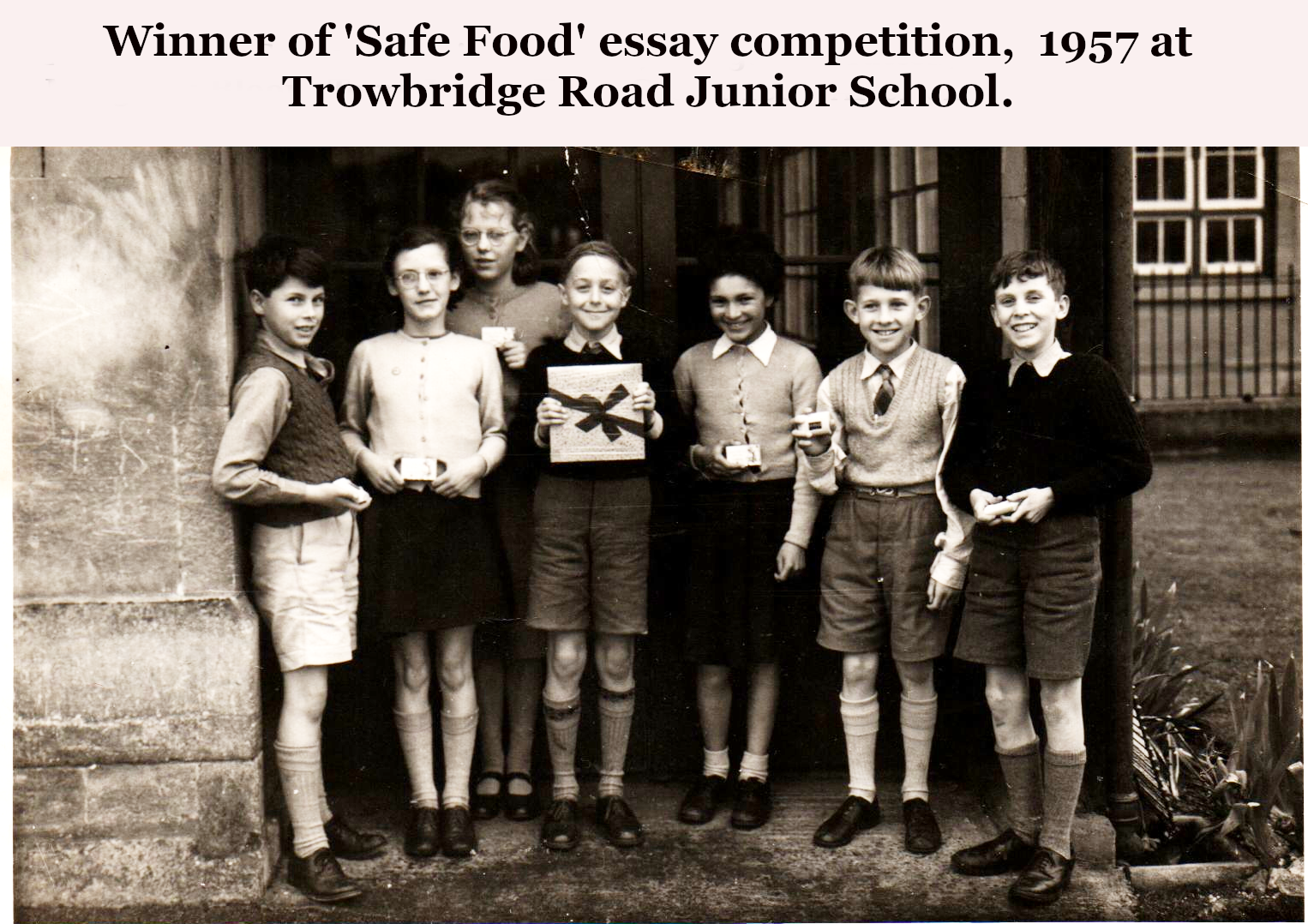
Adrian at age nine or ten was happy to win a box of chocolates in an essay competition held by the local council's 'Safe Food Exhibition' in the town. Ironically when he became a councillor decades later he was responsible for environmental health.
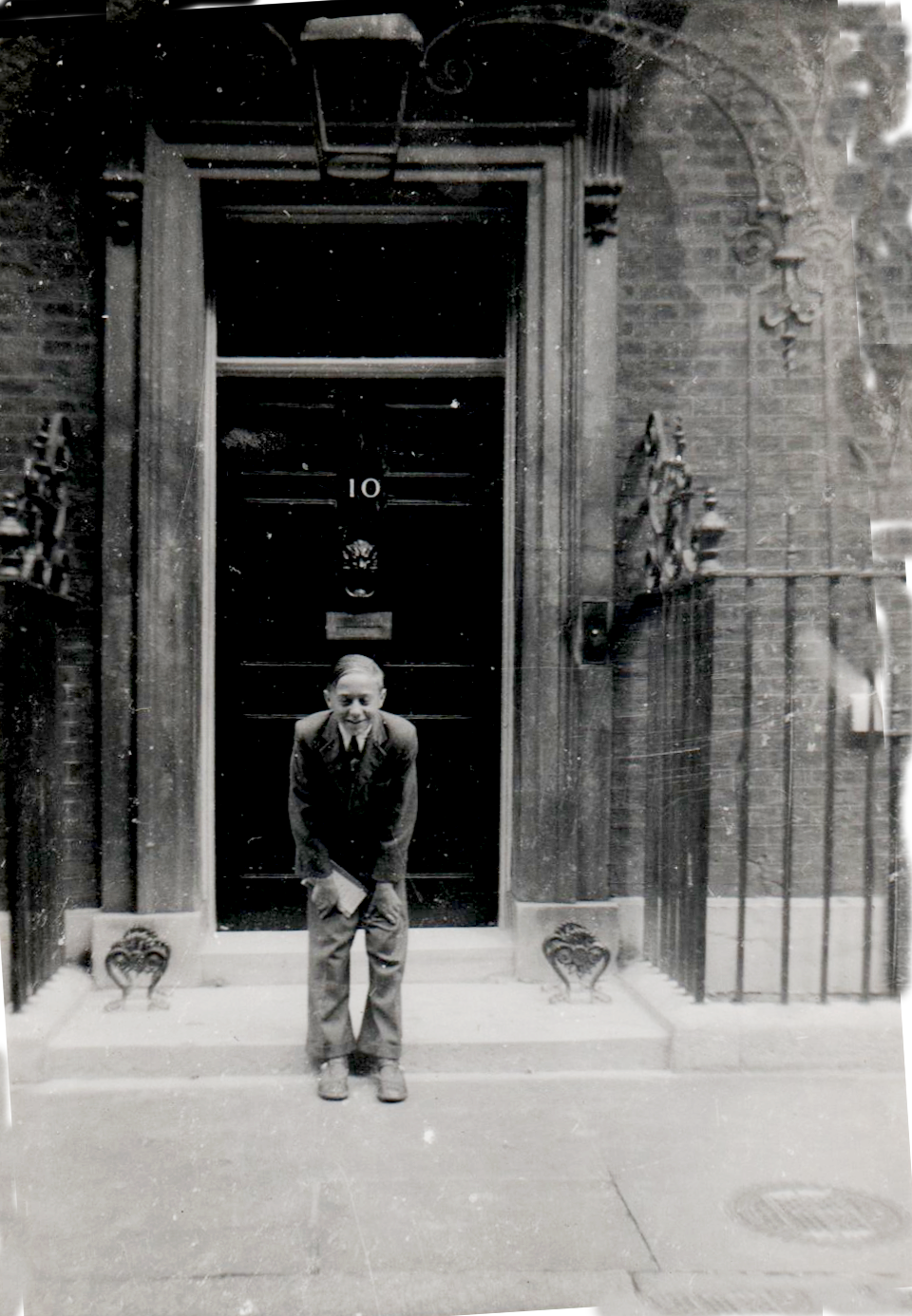
Early political ambitions outside Downing Street at age ten. He has always been very active politically but only ever became a District Councillor. But he was active for many many years in the original Young Liberals locally and nationally.

Adrian spent a lot of my time in the 1970s caving with his girlfriend and later hia wife, Sally. This photo was taken in the Mendips but later they explored a lot of huge caves together in NW Spain in Cantabria.
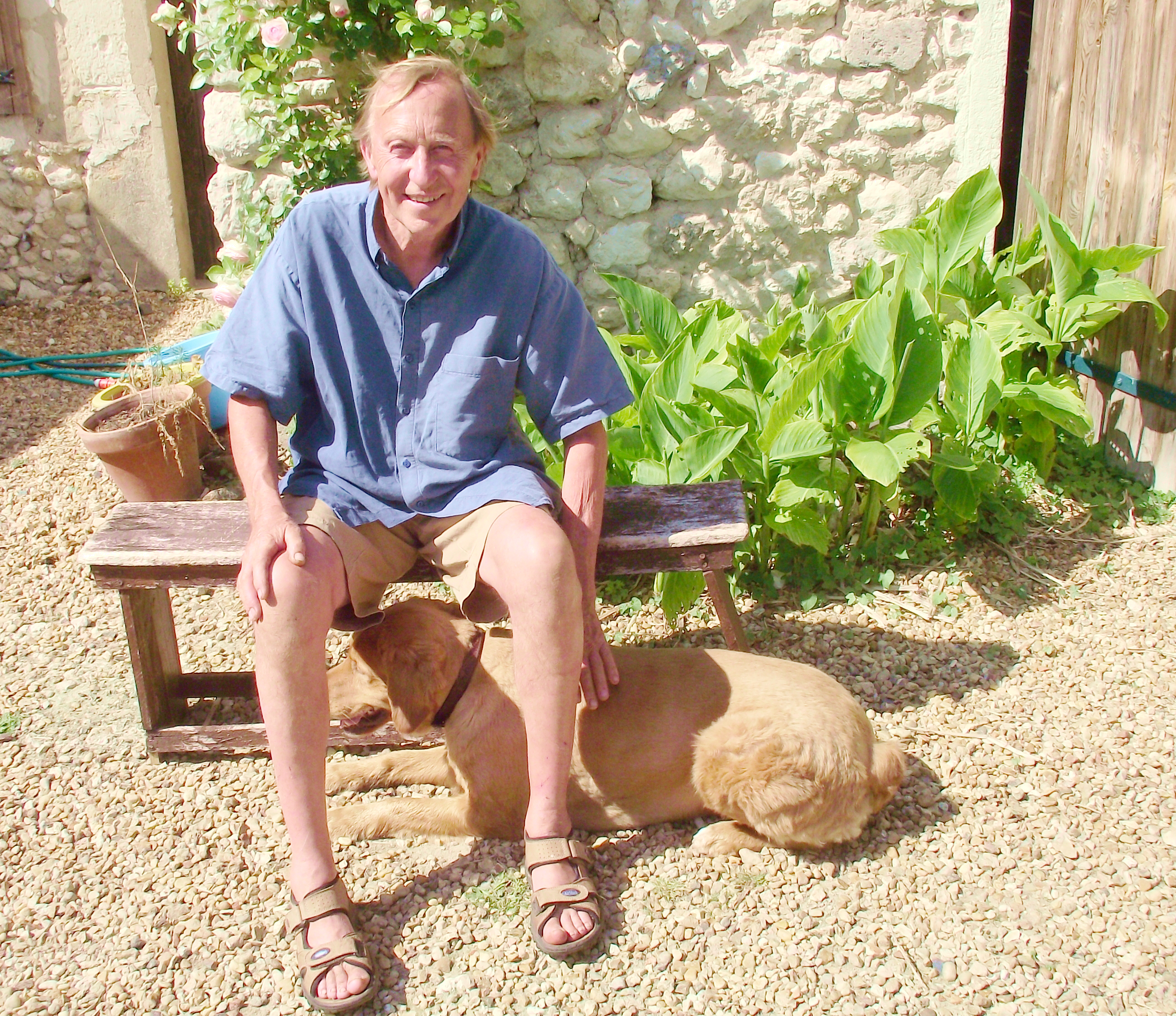
After 30 years of teaching, and serving on West Wiltshire District Council from 1991 to 2003, Adrian retired to a ruined rural small holding. Sally and he spent the next twenty years renovating and developing it and another adjacent house as a holiday letting.
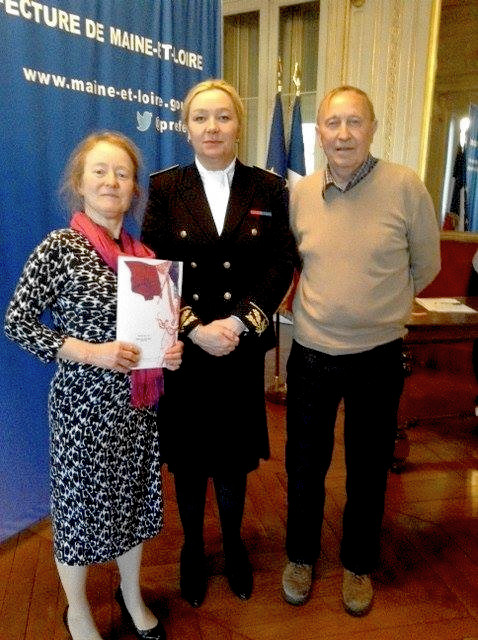
In 2018 Adrian and Sally became French citizens and were awarded their citizenship at a ceremony in Angers.
In 2020 Adrian suffered a stroke which made life very difficult for a year or so but he has now substantially recovered and is back to gardening and a lot of DIY projects.
He retains a keen interest in politics, science and horticulture and especially environmental issues and climate change.
Today's Comment: THE TRUE COST OF BREXIT
It has been five years since Brexit “got done” – and voters and politicians alike are still counting the cost.
Brexiteers promised a new age of British sovereignty, a crackdown on migration and the much-derided “£350m a week” that could be diverted from the EU back into the NHS.
But half a decade on, and by many metrics, Brexit appears to have missed the mark.
The cost of Brexit is still being determined, but the government watchdog estimates that the economy will take a 15 per cent hit to trade in the long term, while experts suggest that the UK has suffered £100bn in lost output each year.
And almost six in 10 Britons (59 per cent) think that Brexit has gone fairly or very badly, with just 12 per cent believing it has gone well.
Brexit-optimist economist Julian Jessop, a fellow at the Institute of Economic Affairs, says “The UK’s departure from the EU has undoubtedly had some negative effects on the economy, notably through reductions in trade, shortfalls in business investment, and disruption to labour markets.”
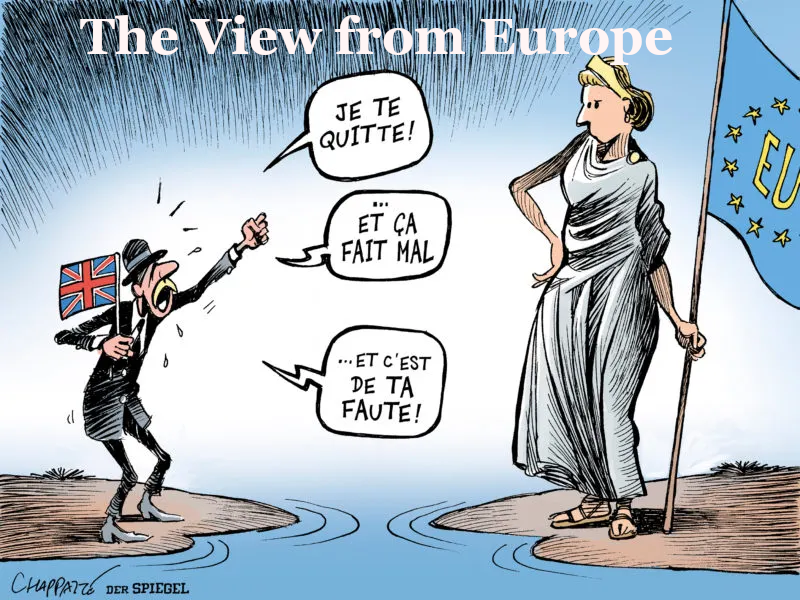 A costly divorce
 The latest Treasury estimates show that the cost of Britain’s settlement with the EU stands at approximately £30.2bn in total. This is separate from any estimates of lost money from separating from the EU. As of the start of 2024, the bulk of this settlement (£23.8bn) had already been paid. Approximately £6.4bn still remained to be paid out to the EU in 2024 and onwards.
However, this cost is hardly comparable to the forecasted losses from exiting the EU in terms of GDP and trade.
So, what is the real cost of Brexit so far?
IEA economist Mr Jessop said that it is still too soon to judge the long-term costs or benefits of Brexit, adding: “At the aggregate level, it is impossible to separate out the impact of Brexit from other shocks, notably the pandemic and the energy crisis. But the UK’s GDP took the worst hit compared to all other G7 nations at the time; a 10.3 per cent drop in 2020.
In 2023, Bloomberg Economics estimated that the UK is suffering £100bn a year in lost output from leaving the EU.
Sir Nick Harvey, the CEO of pro-EU think tank European Movement UK, says “Being out of the European single market has now dented the British economy by more than 5 per cent, causing an annual shortfall in Treasury finances of almost £45bn. That equates to around a third of the basic rate income tax yield.”
The impact on trade
A recent study from the Centre for Economic Performance at LSE found that goods exports from the UK dropped by £27bn in 2022 alone as a result of Brexit.
Specifically, the study concludes that the UK’s trade cooperation agreement (TCA), implemented in January 2021, reduced UK goods exports (excluding services) worldwide by 6.4 per cent due to a 13.2 per cent fall in EU exports.
The study suggests that 16,400 businesses – some 14 per cent of UK exporters – stopped exporting to the EU due to Brexit trade rules.
“Brexit has negatively affected our exports, more than our imports from the EU. It’s been easier for European importers to find alternate suppliers, than for UK importers to replace European suppliers.”
Some of the worst-hit trade sectors have been food, agriculture and fishing.
Within the dairy business, one in 12 farmers has had to cut production in 2024, according to a poll from Arla Foods UK, with 56 per cent of dairy producers saying it is harder to recruit workers post-Brexit and Covid.
As part of its anti-EU campaign, Nigel Farage’s Ukip party launched a poster series in 2015 suggesting that UK fishing had been “ripped apart” by the EU.
Yet fishermen have been largely unhappy with post-Brexit terms agreed in the TCA, with a French-British stalemate and continued restrictions on British fishing.
Seafood exports have dropped by a quarter since 2019, from 454,000 tonnes a year to 336,000 tonnes in 2023. In December, Sir Keir struck a new EU fishing deal worth £360m, which will increase fishing opportunities by 15,000 tonnes (11 per cent).
When excluding emergency funding due to Covid, the planned NHS budget scarcely increased in 2020/21 and 2021/22 despite promises that Brexit would see huge funding increases from savings in EU costs.
Following the 2016 referendum, Mr Farage immediately said he was unable to promise money paid to the EU would instead be spent on the NHS, saying: “No I can’t guarantee it, and I would never have made that claim. That was one of the mistakes that I think the Leave campaign made.”
A key principle of the Leave campaign was to cut down on immigration. But leaving the EU did not have the intended effect on net migration.
Britain left the EU in 2020, but since then, net migration and immigration have soared. At least 3.6 million immigrants have entered the UK since Brexit (between June 2021 and June 2024.
Revised government figures for the year ending June 2023 show record-breaking levels of net migration at 906,000 people.
As a result of Brexit, UK nationals also lost free movement to and within the EU.
Labour MP Stella Creasy, the chair of the Labour Movement for Europe, said: ”The public are not fools – they know Brexit benefits are rarer than hens’ teeth. What they now need is realistic solutions to the problems it is causing like a youth mobility deal or rejoining the pan-European Mediterranean convention.”
It seems that the UK should URGENTLY start to review its relationship with Europe. It is one thing to make a fundamental mistake in a national referendum.
It is quite another to recognise the damage and continue to do nothing at all about it and just watch Britain decline.
Article edited from the Independent of January 5th 2025
The Third Column: Beware the New Eugenics
The New Eugenics....Adam Rutherford reveals the ‘new racism’
One would have hoped the fall of empire and the defeat of Nazism marked their demise of eugenics and racism. But these views are creeping back into the mainstream, fuelled by the concerted efforts of international networks of activists – and American tech money.

What we are witnessing is a coordinated renaissance in eugenics and race science.
Eugenics was formalised as a scientific discipline in the 19th century by Francis Galton, who dedicated his life to promoting the idea that certain populations could and should be improved via selective breeding of humans.
With Galton as inspiration– eugenics came to be an idea supported on the political left and right. New progressive movements such as the Suffragists and advocates for birth control such as Marie Stopes were also keen eugenicists. Their views on the innate superiority of white people, though abhorrent to us now, were typical of the time.
The hive of scientists in America responsible for the spread of eugenics even provided inspiration for the Third Reich, which drew support for their policies of mass sterilisation, persecution and murder.
Despite the thorough debunking of race science by contemporary genetics, and the growing acceptance of our multiracial reality, such thinking has not been extinguished. The current eugenicists and race scientists seem to have courted tech multimillionaires. The plan appears to be to normalise views that historians and scientists have long debunked.
Group differences, of course, are real and people are different – and genetics plays a huge role in influencing those differences, in physical appearance and in our behaviours.
But does that mean race is a biologically meaningful definition?
Race as we currently use it is a socially constructed idea, but one with biologically meaningful consequences. Black and brown people endure worse medical outcomes not because they are black or brown, but because of poverty and deprivation. The science very clearly evidences this, and no amount of ‘race science’ – can debunk it.
Rutherford argues that race is a social construct rather than a biological reality. He explains that while humans exhibit genetic diversity this has no relationship with traditional racial classifications. The concept of race is rooted in social and historical contexts, not in biological differences.
Genetic studies reveal a high degree of genetic similarity among all humans, with more genetic variation WITHIN racial groups than between them. The idea of racial purity is a myth, as everyone has a mixed ancestry. For instance, every person with European ancestry shares a common ancestor who lived around 600 years ago. And that all humans are descended from a small group of ancestors who left Africa about 70,000 years ago.
Rutherford challenges the misuse of genetics to support racist ideologies. Genetics does not support the idea of inherent racial differences in traits such as intelligence or athletic ability. Understanding genetics can help debunk pseudoscientific claims about race and promote a more accurate and inclusive view of human diversity.
Genetic data is too often misused to justify racism and eugenics. He advocates for a careful and ethical use of genetic information, emphasizing that science should not be used to reinforce harmful social constructs.
Summarised from Adam Rutherford's 'How to Argue with a Racist'